
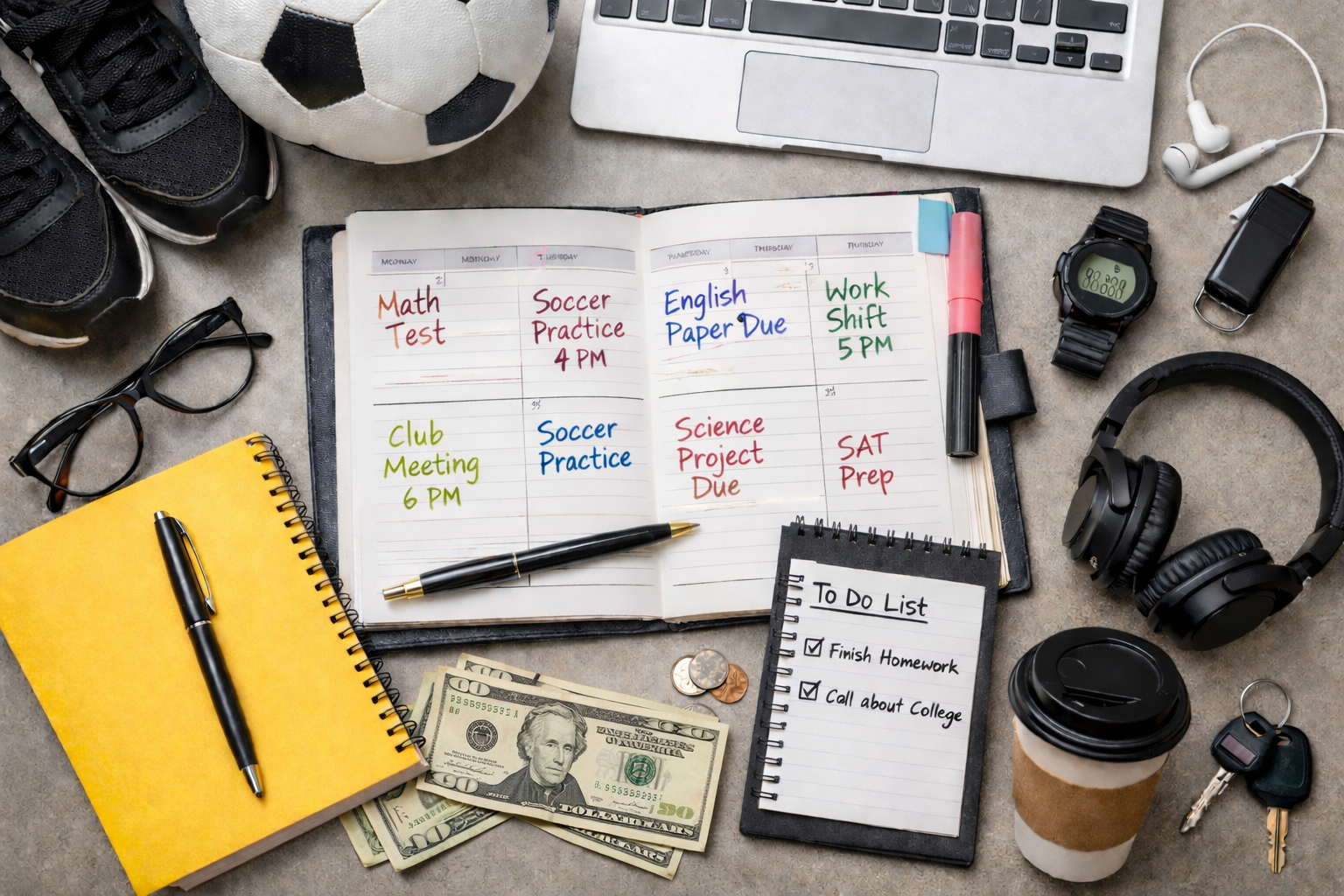
If you parent a sophomore, junior, or senior, life feels full now.
School.
Sports.
Jobs.
Clubs.
Test prep.
Social plans.
As a parent, you juggle your own responsibilities while keeping everyone moving.
So when it comes to career planning, it’s easy to say:
“We’ll deal with that when life slows down.”
That sounds reasonable.
The problem is that life rarely slows down.
It just changes shape.
Busy Is Not the Problem. Direction Is.
One season ends. Another begins.
Junior year becomes senior year.
Summer plans become applications.
Deadlines get closer.
And what once felt optional starts to feel urgent.
Teens don’t fall behind because they are lazy.
They fall behind because they lack a small, repeatable plan.
And research supports this.
A 2024 systematic review found that career interventions for high school students improved career knowledge, exploration, adaptability, and decision-making confidence.
Another 2024 study found that greater confidence in career decision-making was associated with higher learning engagement among senior high school students.
In simple terms?
When teens feel clearer about where they’re headed, they engage more.
What Uncertainty Actually Looks Like
When teens feel unsure about the future, it doesn’t always look like anxiety.
Sometimes it looks like:
• Procrastination
• Avoidance
• Low motivation
• “I don’t know.”
Often, the conversation just feels too big.
So they do nothing.
Not because they don’t care.
Because no one helped them break it into pieces.
The Illusion of Progress
I see this often.
A teen is busy. Productive. Involved.
From the outside, everything looks fine.
But no one is helping them connect the dots between:
What they enjoy
What they’re good at
What drains them
And what that might mean for after high school
So time passes.
Busyness creates the illusion of progress.
But there is only motion, not direction.
Why Waiting Makes It Harder
For a sophomore, waiting means missing time to notice patterns.
For a junior, waiting increases the pressure in senior year.
For a senior, waiting leads to rushed decisions.
This is not about panic.
It’s about structure.
Families aren’t failing.
They’re managing an important process without a system.
What Small Progress Looks Like
Career planning doesn’t need to become a major project.
It can start small.
One car ride conversation.
One question about what they enjoy.
One look at a possible path.
One observation about energy and environment.
Small steps create momentum.
And momentum lowers pressure.
You Don’t Need More Time. You Need Rhythm.
If your family has been waiting for a calmer season, this is your reminder:
That season may not arrive on its own.
But progress can begin now.
You don’t need a perfect plan.
You don’t need an empty calendar.
You need a simple way to begin.
If this resonates, join me for my upcoming May info session:
One Hour a Week: How Busy Teens Can Explore Their Future Without Adding More Stress
I’ll walk you through how to build a repeatable rhythm that works with your teen’s schedule — not against it.